
Talent Sourcing: How Search Firms Build Pipelines Faster with AI

Every search firm runs on the same constraint: pipeline speed. The faster a desk moves from open search to qualified shortlist, the more searches it can run at once — and the more revenue it books in a quarter.
Talent sourcing is usually where that speed leaks away. Manual searching, tab-switching between LinkedIn and the CRM, and re-researching candidates who were already sitting in the database last month all add hours to every single search.
This guide breaks down what talent sourcing actually involves, why the traditional approach slows search firms down, and how AI builds pipelines faster — without losing the rigour a quality shortlist demands.
What Is AI-Powered Talent Sourcing?
Talent sourcing is the process of proactively finding and engaging candidates before a role is confirmed open, so a pipeline already exists when a search starts. AI-powered sourcing automates the finding and matching part. It searches a database or the open web using natural language instead of Boolean strings, then ranks candidates by actual fit rather than keyword overlap.
For a firm, the distinction that matters isn’t AI versus no AI. It’s whether sourcing happens inside the same system managing the search, or across three disconnected tools that all need manual syncing.
4 Risks That Traditional Talent Sourcing Might Slow Search Firms Down
1. Searching happens outside the CRM.
A recruiter finds a candidate on LinkedIn, then has to manually check whether that person is already in the database. That step gets skipped often enough to cause duplicate outreach and awkward re-introductions.
2. Boolean search doesn’t scale across desks.
Writing a precise Boolean string takes real skill, and every recruiter writes them differently. On a desk running 15 searches at once, that inconsistency shows up directly in pipeline quality.
3. Database decay goes unnoticed.
A candidate who was a mid-level engineer in the database eight months ago may now be a senior manager. Without ongoing enrichment, firms keep re-sourcing candidates they’ve already placed elsewhere, or missing a strong internal match entirely.
4. Client capacity is capped by recruiter hours.
Sourcing a single search can take six to eight hours of manual work. That makes a firm’s growth ceiling a function of headcount, not pipeline strategy. That’s the constraint AI is built to remove.
Also read our blog on The Future of AI in Recruiting (2026 Edition)
How AI Helps Search Firms Source Talent Faster
1. Natural language search replaces Boolean strings.
Describing a candidate in plain English gets ranked matches back instantly. That removes the skill gap between a senior sourcer and someone new to the desk.
2. Existing database gets searched first.
Before expanding outward, AI-native sourcing checks candidates already in the CRM. That’s often the fastest and cheapest source of a placement, since there’s no cold outreach required.
3. Duplicate and blacklisted profiles get excluded automatically.
The system filters out candidates already in an active pipeline, already placed, or flagged as off-limits. No manual checking required.
4. Enrichment happens on demand.
Candidate details, current title, company, and contact information get refreshed automatically instead of going stale in the database.
None of this replaces a recruiter’s judgment on fit and client context. What it removes is the repetitive research work standing between a search opening and a shortlist existing.
Building a Faster Talent Sourcing Strategy
A faster sourcing strategy isn’t about adding more tools. It’s about removing the steps between finding a candidate and starting a real conversation.
- Search the existing database before sourcing new candidates. Most firms underuse the pipeline they’ve already built.
- Standardize how searches get described, not just how they get run, so results are consistent across recruiters on a desk.
- Automate the parts that don’t require judgment: duplicate checks, enrichment, and initial outreach sequencing, so recruiter time goes toward conversations and client management.
- Track time-to-shortlist as a metric, not just time-to-fill. It’s the earliest signal that a sourcing bottleneck exists.
For a deeper breakdown of sourcing tactics beyond the AI layer, this guide to talent sourcing strategy covers channel selection, outreach sequencing, and candidate persona work in more depth.
Talent Sourcing Tools and Software Search Firms Need
Most firms end up choosing between two setups: an AI sourcing layer built into their CRM, or a standalone sourcing tool that then needs to sync data back manually.
Recruiterflow runs AI-powered sourcing natively inside the ATS and CRM through AIRA Source.
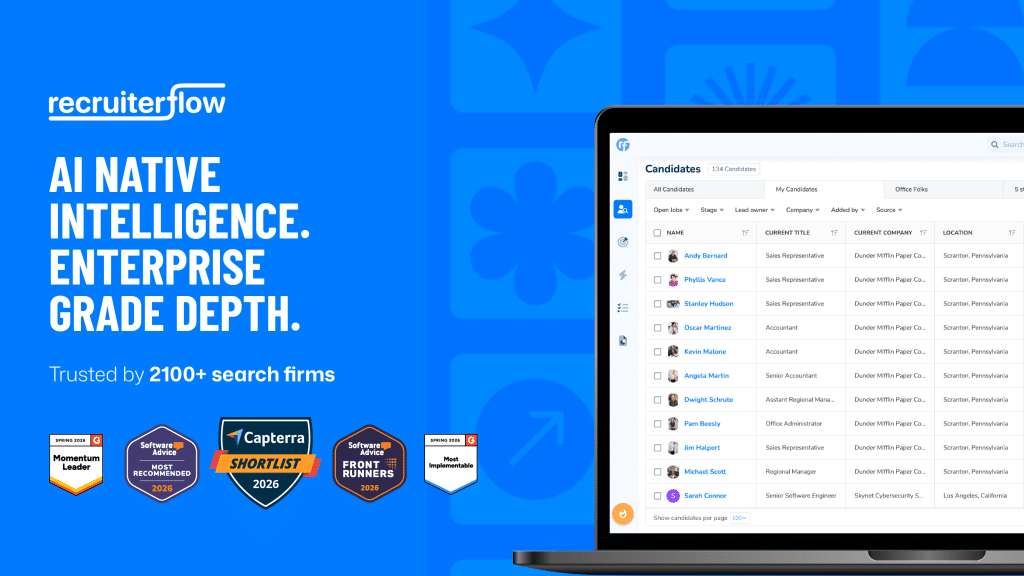
A candidate found through sourcing moves straight into a job, gets enriched, and enters an outreach sequence. No tool-switching, no duplicate data entry.
Juicebox and HireEZ are AI-native sourcing platforms built for searching the open web across hundreds of millions of profiles using natural language. Both are useful for firms that need external reach beyond a CRM’s own database.
Findem focuses on data enrichment and integrates with an existing ATS rather than replacing it. That fits firms that want to keep their current CRM and add a sourcing layer on top.
The right choice depends on whether a firm wants sourcing built into daily workflow or layered on separately. For a fuller comparison across tools and pricing, see this list of AI sourcing tools and this roundup of sourcing tools more broadly.
FAQs
What is a talent sourcing strategy?
A talent sourcing strategy is a defined, repeatable approach to proactively building candidate pipelines before roles open, rather than reacting to each new search from scratch.
What is talent sourcing software?
Talent sourcing software helps recruiters find, enrich, and organize candidate information. It ranges from AI-native platforms that search the open web to CRM features that search a firm’s own existing database.
How is talent sourcing different from recruiting?
Sourcing is the proactive, upstream step: finding and engaging candidates before a role is confirmed. Recruiting covers the full process from there through interviews, offers, and placement.
How does AI help firms build candidate pipelines faster?
AI removes the manual research steps in sourcing: writing precise search queries, checking for duplicates, and keeping candidate data current. That shifts recruiter time from searching to conversations.
What are the best talent sourcing tools for firms?
It depends on whether a firm wants sourcing built into its CRM or handled by a separate specialized tool. Recruiterflow, Juicebox, HireEZ, and Findem each take a different approach, covered in more depth in our full tools comparison.
Can AI replace talent sourcers?
No. AI removes repetitive research work, but judgment on candidate fit, client context, and relationship building still depends on a recruiter. Firms using AI sourcing well are reassigning recruiter time toward those higher-value parts of the job, not removing the role.
Recruitment
Ayusmita is a B2B storyteller who spends her time translating recruiting workflows into clear stories at Recruiterflow.


Ayusmita