
8 LinkedIn Recruiter Alternatives Worth Looking At in 2026

LinkedIn Recruiter Corporate just got more expensive. In 2026, renewal invoices are landing at $10,800 to $12,960 per seat per year — a roughly 15% increase with no headline feature to justify it. For a five-recruiter firm, that’s the difference between $56,400 and $64,800 annually on the same product. At ten recruiters, the line item passes $129,000. (Source: Leonar, 2026)
The price isn’t the only issue. LinkedIn Recruiter only surfaces 1st, 2nd, and 3rd connections — it doesn’t index the open web, GitHub, Stack Overflow, or professional communities outside LinkedIn. InMail limits cap outreach volume. And there’s no CRM, no ATS, no outreach automation — it’s a sourcing tool that hands candidates off to a separate workflow.
Here are 8 linkedIn recruiter alternatives worth looking at in 2026 — what each one does, who it’s best for, and where it falls short.
What to Look For Before You Switch
Database breadth. Does it source beyond LinkedIn? The open web, GitHub, academic databases, and 50+ professional platforms give access to candidates who don’t have an active LinkedIn presence.
Outreach built in or native. A sourcing tool that still requires you to export contacts into a separate email tool adds a step that costs time and breaks data continuity.
ATS/CRM integration. Does it sync back to where you manage the relationship — or does it create another silo?
Pricing model. Per-seat annual contracts with 15% built-in increases are the LinkedIn problem. Look for per-seat monthly options, flat team pricing, or tools priced on usage rather than headcount.
Contact data quality. Verified email and phone — not just a LinkedIn profile URL — determines whether sourcing converts into actual outreach.
The 8 Alternatives
1. Recruiterflow — AIRA Source + Multi Channel Sequences
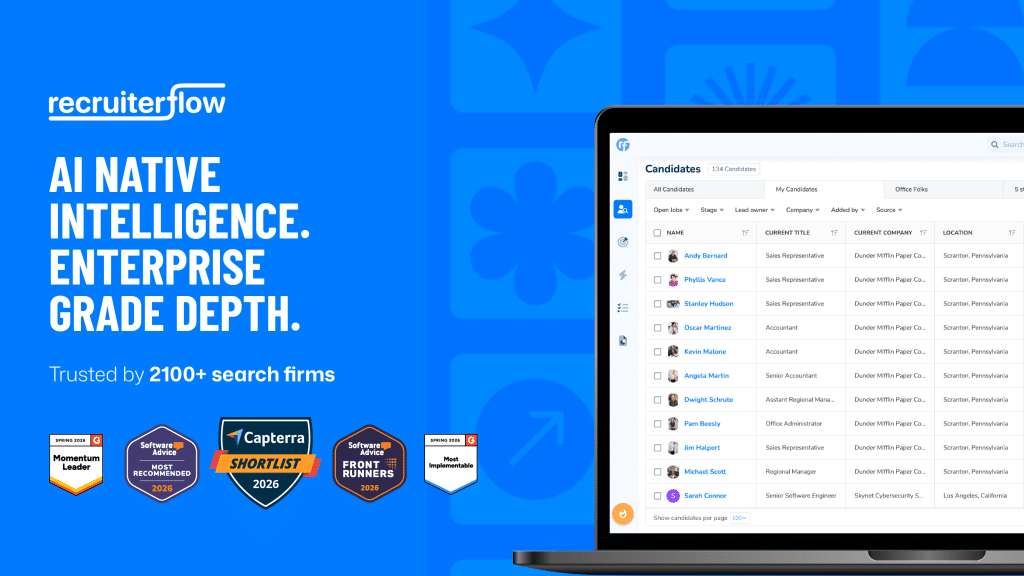
What it is: The only option on this list where sourcing, CRM, ATS, and multi-channel outreach live in a single system.
AIRA Source finds candidates without leaving Recruiterflow.

Sequences 2.0 engages them across email, LinkedIn, SMS, and phone — with branching logic that routes connected contacts via LinkedIn and unconnected contacts via email automatically.

Best for: Retained and contingent recruiting firms that want to consolidate their sourcing and outreach stack rather than add another tool on top of an existing CRM.
The difference: Every other tool on this list is something you add to your workflow. Recruiterflow is the workflow. Candidates sourced through AIRA Source land directly in the CRM, with context from previous interactions already attached. No export. No data loop to close.
Key limitation: If you need a dedicated LinkedIn talent database as a standalone product, this isn’t designed to replace LinkedIn’s network. It’s designed to reduce your dependence on it.
2. hireEZ (formerly Hiretual)
What it is: An AI-powered outbound sourcing platform with 800M+ candidate profiles indexed across 45+ platforms — LinkedIn, GitHub, Stack Overflow, academic databases, and more.
Best for: Teams doing high-volume technical or specialised sourcing where LinkedIn’s network coverage leaves gaps.
Pricing signal: $169–$450+/month depending on team size and features.
Key limitation: It’s a sourcing tool, not a CRM or ATS. Candidates found in hireEZ still need to be managed elsewhere. The outreach functionality exists but is not its primary strength.
3. Apollo.io
What it is: Originally a sales intelligence platform that became widely adopted for recruiting. 275M+ contact profiles with verified email and phone. Strong outreach sequencing built in.
Best for: Firms that do both business development and candidate sourcing and want one tool to handle both. Also the most cost-accessible option for smaller teams. Useful alongside a broader social recruiting strategy.
Pricing signal: Free tier available. Paid plans from $49/user/month.
Key limitation: Built for sales, not recruiting. The search filters and candidate experience context are weaker than dedicated sourcing tools. Works better for BD outreach than nuanced candidate qualification.
4. SeekOut
What it is: A deep-profile sourcing platform with 1B+ profiles, strong diversity filters, and technical candidate indexing across GitHub, patents, research papers, and academic publications.
Best for: Executive search and specialised technical roles where LinkedIn’s database doesn’t surface the right candidates. Strong for diversity sourcing mandates.
Pricing signal: $10,000+/seat/year — in the same bracket as LinkedIn Recruiter Corporate.
Key limitation: The price point doesn’t solve the LinkedIn cost problem. SeekOut makes sense as a complementary tool or replacement for specific use cases, not as a budget alternative.
5. Lusha
What it is: A contact data enrichment platform. Given a name or LinkedIn profile, Lusha returns verified email and direct phone. Browser extension works directly on LinkedIn.
Best for: Teams that still use LinkedIn Recruiter for search but want better contact data than LinkedIn InMail provides. Pairs well with a structured sourcing process.
Pricing signal: Free tier (5 credits/month). Paid from $36/user/month.
Key limitation: It enriches contact data. It doesn’t source candidates, manage pipelines, or automate outreach. It’s a point solution — useful but limited in scope.
6. ContactOut
What it is: Email and phone finder for LinkedIn profiles, with a candidate search interface covering 300M+ profiles. Browser extension surfaces contact data while browsing LinkedIn.
Best for: Recruiters who want a lower-cost Lusha alternative with a slightly broader search interface. Free tier is genuinely useful for low-volume sourcing. Good entry point for building free resume sourcing capability.
Pricing signal: Free tier available. Paid from $29/user/month.
Key limitation: Data accuracy varies. Less reliable than Lusha for direct dials. Search functionality is lighter than hireEZ or SeekOut.
7. SourceWhale
What it is: A multi-channel outreach sequencing platform that integrates with existing CRMs and ATS systems. Email, LinkedIn, and phone sequences with analytics across the workflow.
Best for: Teams that already have a sourcing database and CRM but want dedicated outreach sequencing with stronger analytics than their current setup provides.
Pricing signal: Around $100–$150/user/month.
Key limitation: It’s an outreach layer, not a sourcing database. You still need a separate tool to find candidates. It also requires integration with your CRM — if that sync breaks, data continuity breaks with it. Worth noting that Recruiterflow’s Sequences 2.0 covers the same outreach functionality natively, without the integration dependency.
8. Gem
What it is: A talent CRM and sourcing platform built specifically for in-house talent acquisition teams. Strong pipeline analytics, diversity reporting, and ATS integration.
Best for: In-house TA teams at scaling companies — not recruiting firms. Gem is built around internal hiring workflows, headcount planning, and internal stakeholder visibility.
Pricing signal: Enterprise pricing, typically $15,000+/year for team access.
Key limitation: Not built for agency recruiting or external search firms. The product assumes you’re hiring for your own organisation. Including it here because it appears in most “LinkedIn Recruiter alternatives” roundups — but if you’re running a recruiting firm, it’s the wrong category of tool.
The Honest Summary
Most alternatives on this list solve one part of the LinkedIn Recruiter problem — database, outreach, or cost. Few solve all three.
If your goal is to reduce LinkedIn dependency while keeping sourcing, outreach, and CRM in a single system, the tools worth comparing directly are Recruiterflow (AIRA Source + Sequences 2.0) and hireEZ for database depth alongside your existing workflow. For contact enrichment on a budget, Lusha or ContactOut sit on top of whatever sourcing process you already have.
The 15% annual increase isn’t a one-time event. It’s a pattern. A five-recruiter firm that absorbs it for three years pays roughly $20,000 more for the same product. That’s the real cost of not evaluating alternatives.
Find and Engage Candidates Without Leaving Your ATS
AIRA Source finds candidates. Sequences 2.0 engages them across email, LinkedIn, SMS, and phone. Both live inside Recruiterflow — no separate seat, no data export, no integration to maintain.
Book a personalised demo and see AIRA Source running inside a live recruiting workflow.

Frequently Asked Questions
What are the best alternatives to LinkedIn Recruiter in 2026?
The best alternative depends on what you need to replace. For all-in-one sourcing, CRM, and outreach inside a single platform, Recruiterflow with AIRA Source is the strongest option for recruiting firms. For standalone database depth, hireEZ covers 800M+ profiles across 45+ platforms. For contact enrichment on a budget, Lusha or ContactOut are the standard choices.
How much does LinkedIn Recruiter cost compared to alternatives?
LinkedIn Recruiter Corporate runs $8,999–$12,960 per seat per year in 2026, following a ~15% price increase. Lite is $1,680/year for a single seat. Most alternatives — hireEZ, Apollo, SourceWhale — start at $49–$450/month per user, with free tiers available on Apollo and ContactOut. The gap is significant at team scale.
What is the best LinkedIn Recruiter alternative for recruiting firms?
Recruiterflow. The distinction is that AIRA Source and Sequences 2.0 are built into the ATS and CRM — so sourced candidates land directly in the workflow without an export step. For firms running retained or contingent search, eliminating the context gap between sourcing and managing is the practical difference.
Are there free or cheaper alternatives to LinkedIn Recruiter?
Yes. Apollo.io has a free tier and paid plans from $49/user/month. ContactOut starts free. Lusha offers 5 free credits monthly. These are point solutions — useful for contact data or light sourcing — but don’t replicate LinkedIn Recruiter’s search depth or replace a full recruiting workflow.
Recruitment

Ayusmita is a B2B storyteller who spends her time translating recruiting workflows into clear stories at Recruiterflow.


Ayusmita