
11 Executive Recruiting Best Practices for Better Placements

Executive recruiting is unforgiving at every stage. The margin for error is thin, the timeline is long, and the candidates you want most are the ones least motivated to move.
These eleven best practices won’t make the process easy. But they will make it tighter, faster, and far less likely to fall apart in the places it usually does.
Why Executive Recruiting Requires a Different Approach?
Executive recruiting is not high-volume recruiting with a bigger fee attached.
The candidate pool is almost entirely passive. The timeline runs 10–13 weeks, sometimes longer. And you’re presenting 3–5 candidates — not 30 — which means every name on your shortlist is a direct reflection of your judgment.
The stakes of a bad placement are also categorically different. A mis-hire at the executive level costs multiples of salary, disrupts teams, and damages client relationships that took years to build.
That’s why the process demands a level of rigour, discipline, and candidate relationship management that most recruiting workflows simply aren’t built for.
11 Executive Recruiting Best Practices for Better Placements
1. Run the Intake Like a Diagnostic, Not an Order Form
The intake call sets every decision that follows.
A rushed 30-minute call — job description attached, brief “done” — is how you build the wrong long list for six weeks before anyone notices. Push past the job spec. What’s the burning platform this hire needs to address? What did the last person get wrong? What makes this company a difficult sell to a passive candidate?
The answers to those questions are brief. Everything else is paperwork.
The bottleneck: Clients who haven’t thought it through yet. Your job is to surface the real requirement — not accept the first version of it.

2. Write the Position Spec for the Candidate, Not the Client
A job description lists responsibilities. A position specification creates desire. The candidate — who is currently thriving somewhere else — needs a reason to take your call seriously. What’s the opportunity? What will they actually own? Why is this the right move at this moment in their career?
Write the spec as if the best person for this role has no intention of moving. Because they probably don’t.
For a deeper look at building a compelling search strategy from the ground up, see our guide to executive search strategy.
3. Map the Market — Don’t Just Search It
Building a long list is not a LinkedIn exercise.
You’re mapping a market — target companies, adjacent industries, functional communities — and identifying 50–80 individuals who could plausibly do this job. Too many names and you haven’t filtered. Too few and you haven’t looked hard enough.
The best researchers aren’t just finding names. They’re finding the people who aren’t looking to be found.
Where this breaks down: Consultant overload. When you’re carrying four searches, the fifth gets the lazy long list — the same familiar names, the same tired sources. That’s when clients start questioning the premium.
4. Use Your Database Before You Touch a Search Engine
If your first move on a new search is a blank LinkedIn search, you’re leaving your most valuable asset untouched.
Your existing database — properly maintained and searchable — contains years of relationships, call notes, and interaction history. A large proportion of your long list should already be in there. AIRA Matchmaker surfaces candidates from your book of business using natural language search, matching against enriched profiles and past interactions before you look anywhere else.
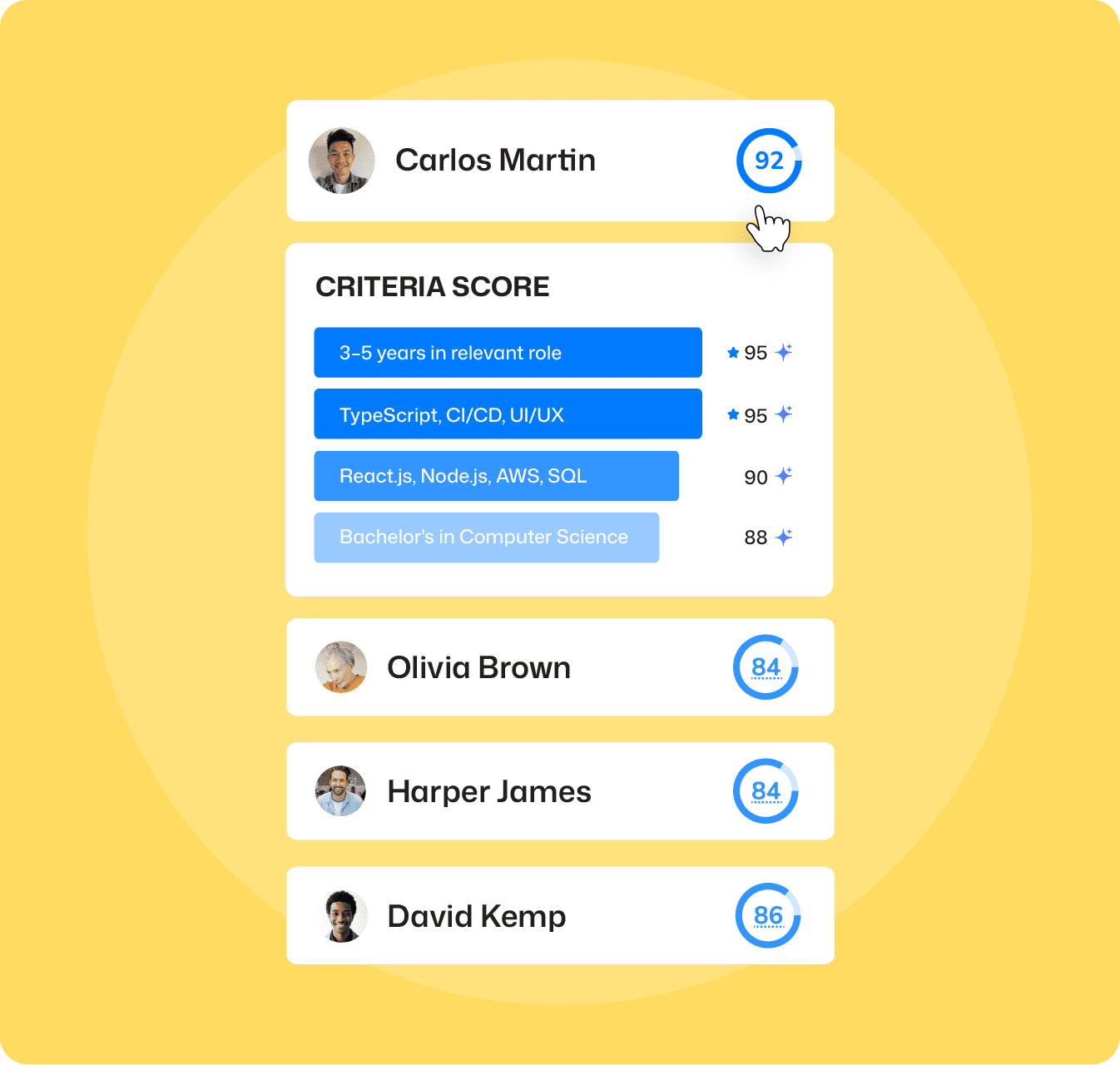
The firms who consistently build the best long lists fastest are the ones who treat their database as a living asset — not a graveyard of old CVs.
See how executive search firms find candidates using their existing data: How Do Executive Search Firms Find Candidates?
5. Treat Every Outreach Message as a 15-Second Audition
Most of the people on your long list are not job hunting.
You’re interrupting a career. The first message needs to be specific, short, and genuinely relevant to that person — not a template with their name swapped in. Generic InMails get ignored. A message that shows you know who they are, what they do, and why this opportunity is worth their attention gets a different response.
One message is a gamble. A three-touchpoint sequence is a process.
6. Screen for Motivation, Not Just Qualification
A technically perfect candidate with low motivation will drop out when the process gets tough.
Your initial screening call — 45 to 60 minutes — is an interrogation of interest as much as fit. What would actually make this person move? What are they not getting in their current role? What would have to be true about this opportunity for it to be worth disrupting a career they’re comfortable with?
Surface the answers early. A candidate who can’t answer those questions clearly is not ready to move — regardless of how good their CV looks.
7. Stop Losing Hours to Document Formatting
The most time-consuming stage of any executive search is not the research. It’s not even the assessment.
It’s the profiling. Writing up a three-page candidate assessment, formatting it in Word, attaching it to an email, updating the CRM manually — multiplied across 8–10 assessed candidates — is where consultant hours quietly disappear every week.
The Submission Agent in Recruiterflow drafts, formats, and sends recruiter-branded candidate profiles in a single click. What used to take three hours takes fifteen minutes. That time goes back into the search.
8. Present Live. Never Email a PDF and Wait.
The shortlist presentation is where your judgment is on display.
Walking the client through your reasoning — live, on a call or in person — lets you handle questions in real time, identify any drift between the original brief and what’s actually generating enthusiasm, and keep the narrative in your hands. Emailing a PDF and asking for feedback by EOD is how searches stall. Feedback takes days. By the time the client responds, the candidate has cooled.
The Recruiterflow Client Portal lets clients review candidates, leave feedback, and advance to interviews in one place — replacing the email chains that add days of latency to every stage.
9. Manage Interview Momentum Like It’s Your Job — Because It Is
Executive roles typically involve four to five interview rounds. That’s a long time for a passive candidate to stay warm.
Every gap between rounds is a window for disengagement. A two-week gap feels like a month in a passive candidate’s decision-making timeline. Your job is coordination and momentum — briefing candidates before each round, debriefing them after, managing feedback loops, and watching for the quiet signals that someone is losing interest or entertaining a competing offer.
If the gap between rounds exceeds a week, the risk of dropout increases sharply. Stay in contact. Not with process updates — with genuine conversation about their thinking.
10. Read What Referees Don’t Say
At the executive level, references are not a formality. They are substantive strategic conversations.
Four to six structured calls — 30 to 45 minutes each — with people who have managed or worked alongside the candidate in meaningful contexts. You’re confirming what the candidate has told you. But you’re also listening for the gaps. Enthusiasm about execution with no mention of strategic vision. Strong praise for relationships with no comment on results.
What’s absent is often as telling as what’s present.
11. Build the Post-Placement Relationship, Not Just the Placement
The 90-day check-in is not an afterthought. It’s your next business development opportunity.
Structured follow-ups at 30, 60, and 90 days show the client you’re invested in the success of the hire — not just the fee. They also give you early warning if something isn’t working, while there’s still time to address it. And if the hire has gone well, the client is at their most receptive to the next conversation.
Recruiterflow’s Job Change Alert notifies you when candidates or clients change roles — so you’re re-engaging at the right moment, not six months after the signal passed.
Also check our blog on How to be Successful in Executive Search Business
Frequently Asked Questions
What are executive recruiting best practices?
Executive recruiting best practices centre on four things: a rigorous intake that surfaces the real requirement, a position spec written to attract passive candidates, disciplined candidate engagement throughout a long process, and a structured post-placement follow-up that protects the relationship. The firms that execute all four consistently outplace the ones that treat any of them as a formality.
How do executive search firms improve placements?
The most consistent improvement comes from two areas: intake quality and candidate engagement. A thorough intake prevents weeks of rework. Proactive candidate management — not just process updates, but genuine relationship conversations — prevents dropout in the interview and offer stages, where searches most commonly fall apart.
What is the executive recruiting process?
Executive recruiting follows ten stages: client intake, position specification, market research and long-listing, candidate outreach, assessment and profiling, client presentation, multi-round interviews, reference and background checks, offer negotiation, and post-placement follow-up. A well-run search takes 10–13 weeks from kick-off to signed offer.
Also check our Ultimate Guide to Executive Search Process in 2026.
How do you evaluate executive candidates?
Executive assessment goes beyond experience verification. The in-depth interview — typically 90 minutes — tests how a candidate thinks, leads, handles adversity, and will present to the client. Equally important is motivation: a technically qualified candidate who isn’t genuinely compelled to move will disengage before the offer stage.
What makes executive hiring successful?
Three things: clarity at the brief stage, momentum through the interview process, and no surprises at the offer stage. Most executive search failures trace back to one of these three. A vague brief produces the wrong shortlist. Scheduling gaps lose the best candidates. And compensation misalignment — discovered at week twelve instead of week two — turns a clean close into a crisis.
Recruitment
Ayusmita is a B2B storyteller who spends her time translating recruiting workflows into clear stories at Recruiterflow.
Ayusmita