
Ultimate Guide to Executive Search Process in 2026
The most common points of an executive search failure are invisible: a vague brief that sends research down a rabbit hole, a “manual” profiling process that kills momentum, or a scheduling gap that causes a top-tier candidate to disengage.
The process is well-understood in theory, but in practice, it is often a battle against administrative friction.
This guide is designed to help you cut through the high-volume hiring noise and focus on the high-value judgment that defines a successful executive search process.
How the Executive Search Process Works (Step-by-Step Guide)
Step 1: The Intake Meeting
The intake meeting isn’t an “order-taking” session; it’s a diagnostic. If you don’t push for clarity now, you will pay for it in rework later. Focus on the “Real Four”:
- The Problem: Why are they hiring? What is the “burning platform” this role needs to address?
- The 90-Day Win: What does success look like three months in?
- The Leadership DNA: Who will this person influence, and who will they challenge?
- The Compensation: Move past “competitive.” Get the specific numbers early to avoid heartbreak in week twelve.
The Bottleneck: A rushed 30-minute call leads to misalignment. Be the expert: ask the hard questions about why the last person failed and what makes the company a difficult sell.

Step 2: The Position Specification (The “Why” Document)
A job description is a list of chores. A position specification is a sales pitch.
Passive executives aren’t looking for work; they’re looking for a reason to listen. Your specification is that reason. It shouldn’t describe the role; it should describe the opportunity.
The candidate needs to know why it’s worth disrupting a comfortable career for a seat at your client’s table.
Also read our blog on How Do Executive Search Firms Find Candidates in 2026?
Step 3: Market Research (The Hunt, Not the Search)
This is where you build the long list. You aren’t just “scanning” LinkedIn; you’re mapping a market.
Target 50–80 individuals. If you have 200, you haven’t filtered. If you have 10, you haven’t looked. There are no shortcuts here. The best researchers don’t just find names; they find the people who aren’t looking to be found.
Research quality usually dies because of “Consultant Load.” When you’re carrying four searches, the fifth one gets the “lazy long list”—the same tired names from your database. This is when clients start asking why they’re paying a premium for a list they could have found themselves.
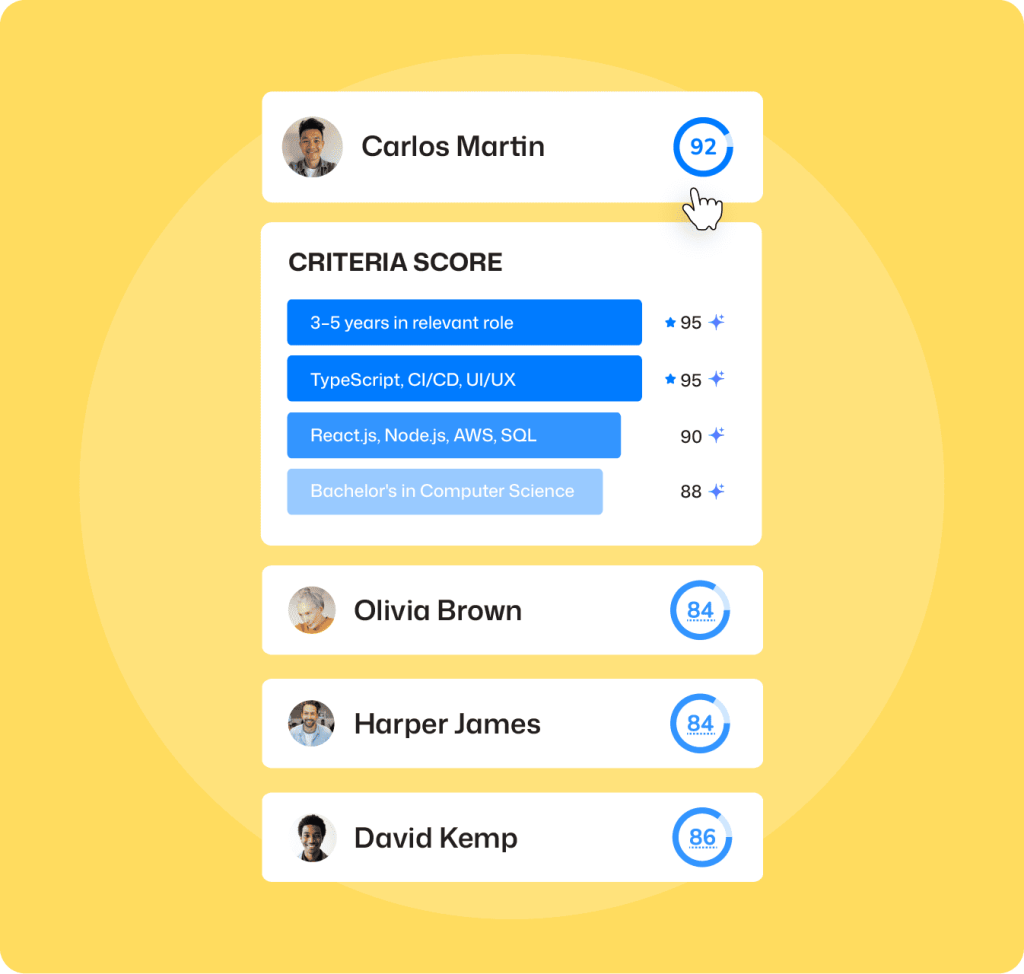
Use your data. AIRA Matchmaker surfaces candidates from your own history before you even touch a search engine. If your first move is a blank LinkedIn search, you’re missing the value of your own network.
Step 4: Candidate Outreach (The Art of the Interruption)
Most of your targets aren’t job hunting. You aren’t responding to an application.
The 15-Second Rule: You have seconds to get an executive’s attention. Make it personal, specific, and brief.
Persistence Wins: One message is a gamble; a three-touchpoint sequence is a process.
The Screen: A 45-minute call is an interrogation of motivation. A technically perfect candidate with low motivation will drop out when the process gets tough.
Step 5: Assessment and Profile Preparation
This is the most time-intensive stage.
You are stress-testing human potential through 90-minute competency interviews.
The Efficiency Play: Many consultants lose hours to “document design.”
Use the Submission Agent in Recruiterflow to generate professional, branded profiles instantly. Your value is in the assessment, not the formatting.
Step 6: Client Presentation
Presenting the shortlist is where your professional judgment is on display.
The Golden Rule: Never just email a PDF and wait. Present live. Walking the client through your reasoning allows you to handle objections and identify shifting requirements in real-time.
Use a Client Portal to replace slow email chains and keep the momentum high.
Step 7: Multi-Round Client Interviews
The “danger zone” for candidate engagement.
Every day of silence feels like a week to a passive candidate. Your job is momentum management. Tighten scheduling, debrief quickly, and keep the “why” of the role top-of-mind for the candidate.
If the gap between rounds exceeds a week, the risk of disengagement triples.
Step 8: Reference and Background Checks
At the executive level, references are substantive strategic conversations. You’re looking for what isn’t said as much as what is. If a referee praises execution but is silent on vision, that is a data point.
Step 9: Offer Negotiation and Closing
The “no surprises” stage. If you’ve done the intake and screening correctly, the final numbers should be a formality.
Your role is to anticipate the counter-offer and reinforce the candidate’s original “why.”
Step 10: Onboarding and Post-Placement
??The placement isn’t the end. It’s the beginning of the relationship that generates your next mandate.
Structured check-ins at 30, 60, and 90 days serve two purposes. They demonstrate to the client that you’re invested in the success of the hire, not just the fee. And they give you early warning if something isn’t working — which, caught early, you can help address before it becomes a failure.
The 90-day call is also your business development moment. If the hire has gone well, the client is at their most receptive. Ask about the next need. Ask for introductions. The best executive search mandates come from clients who have placed someone successfully and want to do it again.
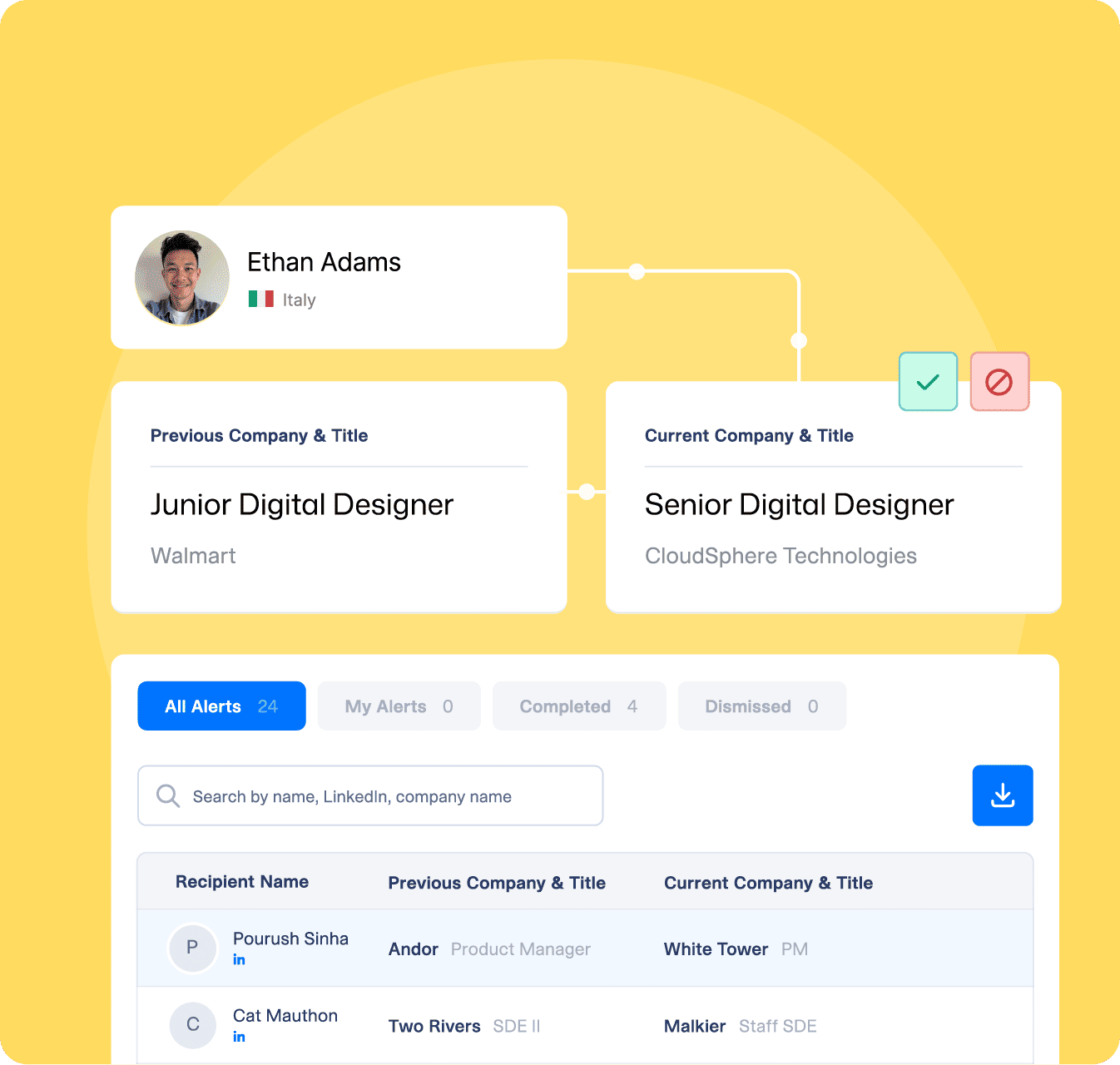
Set a reminder at placement for 30, 60, and 90 days. Don’t wait until you remember. Recruiterflow’s Job Change Alert notifies you when candidates or clients change roles — so you’re re-engaging your network at the right moment, not six months after the signal has passed.
The Executive Search Process Timeline Most Recruiting Firms Plan For — And What Actually Happens
| Phase | Typical Timing | Key Deliverable | Common Bottleneck |
| Client intake & position spec | Week 1–2 | Position specification document | Rushed intake ? misaligned brief ? weeks of rework |
| Market research & long-listing | Week 2–3 | Long list of 50–80 candidates | Research quality degrades when consultants carry 3–4 searches |
| Outreach & initial screening | Week 3–5 | Screened candidate pool (15–20) | Passive candidates need 2–3 touchpoints before they engage |
| Assessment & profile preparation | Week 5–7 | Candidate profiles ready for client | Manual Word/PowerPoint profiling is the single largest time sink |
| Client presentation | Week 7–8 | Shortlist of 3–5 candidates | Emailing a PDF instead of presenting live — searches stall here |
| Multi-round client interviews | Week 8–11 | Preferred candidate identified | Scheduling friction + interview gaps cause candidate dropout |
| Reference & background checks | Week 11–12 | Reference report, BGC cleared | Slow reference calls delay offer stage |
| Offer negotiation & closing | Week 12–13 | Signed offer | Counteroffer risk; compensation misalignment from poor intake |
| Onboarding & post-placement | Day 1 + 30/60/90 | Placement confirmed; relationship maintained | No structured follow-up to missed renewal and referral opportunities |
Why Executive Searches Fail (And How Top Firms Prevent It)
Candidate ghosting on long searches.
A search running 90–180 days is a long time to hold a passive candidate’s attention. Life changes. Competing opportunities appear. A promotion at their current firm changes the calculus entirely.
The firms that manage this best treat candidate relationship management as an active, ongoing activity — not a stage in a process.
Stale databases undermining research quality.
A database with 200,000 records is only valuable if those records are current. Job changes, promotions, compensation shifts — these change who is actually a fit. Most firms have the data. Few are using it with context.
Inconsistency across consultants.
The difference between your best and weakest consultant is usually not skill. It’s process discipline.
Platforms that standardise the workflow close that gap — not by reducing judgment, but by ensuring the infrastructure behind the judgment is consistent.
Also read our blog on How to Optimize Your End-to-End Recruitment Workflow?
Client caution and elongated decision cycles.
What used to be a two-week gap between interview rounds can now stretch to a month. Clients add approvals, change their minds mid-search, slow down during executive team changes.
The firms navigating this best have strong client relationships and a clear way of communicating the cost of delay — particularly in terms of candidate dropout risk.
Margin compression.
Executive search margins are under pressure from both sides. Clients negotiate harder. Operating costs don’t compress. The firms protecting their margins are the ones eliminating low-leverage work — the 10–15 hours per week per consultant that disappears into admin, formatting, and manual data management.
How Technology Is Changing Executive Search?
Recruiterflow is AI executive search software built for executive search firms that present 3–5 candidates, not 50.
AIRA handles the admin: call transcription, CRM updates, candidate profiling, outreach sequencing — so your consultants can do the work that actually closes searches.
Firms using AI at any stage of their process are 3.5–4.5x more likely to have grown revenue year-over-year.
The gap between firms that have made this shift and those that haven’t is widening.
Frequently Asked Questions
1. How long does the executive search process typically take?
In 2026, a standard executive search takes 10 to 14 weeks. The timeline isn’t long because of the “search” itself; it’s long because of scheduling friction and deep-dive assessments. If a search drags past 16 weeks, you aren’t just losing time—you’re losing candidate interest. Momentum is the only way to protect your shortlist from counter-offers.
2. What is the difference between executive search and contingency recruitment?
Contingency is a race for speed; executive search is a race for precision. In contingency, you pay for a placement. In executive search, you pay for a process that guarantees access to the “passive” 80% of the market who aren’t looking at job boards. It’s the difference between catching what’s available and hunting what’s required.
3. Why do so many executive searches fail?
Most searches fail because of “Brief Drift.” This happens when the intake call is rushed, resulting in a vague position specification. By week six, the client realizes the candidates don’t fit because the “real” requirements were never surfaced. You can’t find the right person if you’re looking at the wrong map.
4. What are the key stages of the executive search process?
The process consists of ten critical milestones: Intake, Position Specification, Market Research, Outreach, Competency Assessment, Client Presentation, Interview Management, References, Offer Negotiation, and 90-day Onboarding. If you skip a step, you increase the “risk of fall-out” at the end of the search.
5. How is AI changing the executive search process?
AI isn’t replacing the consultant’s judgment; it’s removing the administrative floor. In 2026, top firms use AI to automate candidate profiling, outreach sequencing, and database enrichment. This allows the consultant to spend more time on high-leverage work—like interviewing and closing—and less time on manual data entry and Word formatting
Recruitment

Ayusmita is a B2B storyteller who spends her time translating recruiting workflows into clear stories at Recruiterflow.


Ayusmita